
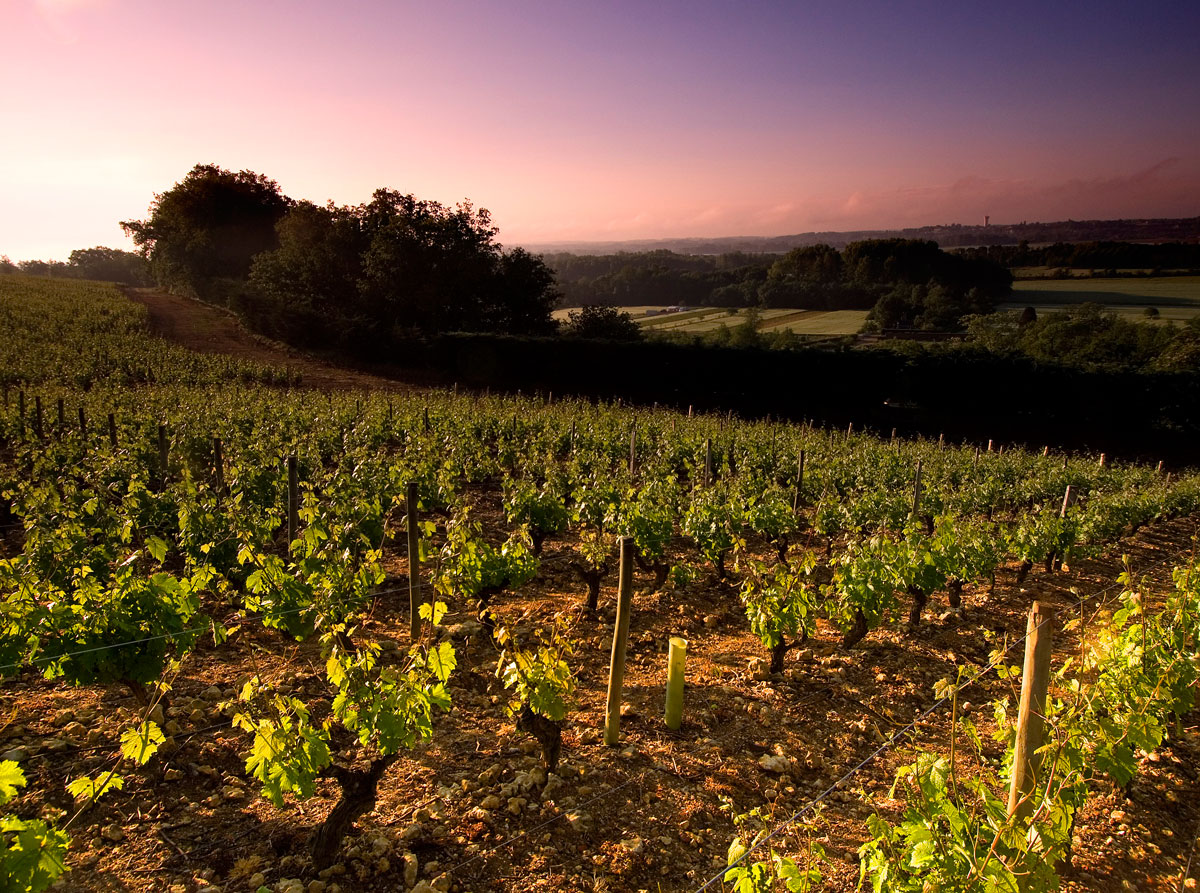
The European stronghold of Chenin Blanc is the Loire Valley in France with 10,362 hectares – (Harding et al., 2023). Outside of its ancestral home it is widely planted in South Africa with 17,147 hectares, where it is grown all over the Western Cape in various different styles.
Praised for its naturally high acidity it is widely acknowledged of being extremely versatile. From traditional method sparkling wine to dry-age worthy white wines, it is praised in the “low-intervention” wine scene too. Lastly, sweet wines from Chenin Blanc are prime examples of denying to age by remaining almost eternally fresh.
Commonly used names and synonyms are: Pineau, Pineau de la Loire, Anjou, Blanc d’Aunis, Gros Pineau, Pineau d’Anjou, Plant de Brézé and many more (Loire valley), Steen (South Africa) (Harding et al., 2023)
In this article, we are going to focus on the aroma and flavour profile of Chenin Blanc, following a structure commonly used by wine institutions like Court of Master Sommeliers (COMS) and Wine & Spirit Education Trust (WSET). We will also compare it with other grape varieties and call out what makes Chenin Blanc unique.

Appearance
Youthful / younger examples: pale straw with some golden/amber reflection. Bright but often not brilliant
Matured examples: often significantly darker in colour (gold) with a deep concentration
Regardless of age and sweetness level these wines are often not filtered which result in sediment or particles

Aromas and flavours
Fruits: Just ripe pear & quince, yellow/golden apples. Pronounced, ripe citrusy notes with candied lemon & orange
White flowers (jasmine), apple blossom
White mushrooms, salty, light honey nuances, salty, chalk & rocks, hay, wet wool and cabbage

Sweetness
Vouvray Sec (max. 8g/l)
Vouvray Demi-Sec & Moelleux (not officially regulated)

Acidity
Medium plus to high. The residual sugar can influence the perceivable sweetness

Alcohol
Medium to medium plus. Drier ones sit on the slightly higher ABV spectrum

Body
Moderate with round mouthfeel

Comparison to others
Unoaked Chardonnay e.g. Chablis – tends to be leaner, lighter in body with a greater focus on citrusy and more tart nuances to it. Lacks the phenolic bitterness and is often brighter in appearance.
Generally Chenin Blanc from South Africa is higher in alcohol and often lacks the hay, wet wool and chalky notes. Additional is often aged in small/medium sizes barrels giving it a creamy / more buttery mouthfeel.

Classic examples
- Marc Brédif (Vouvray)
- Domaine Huet (Vouvray)
- Domaine de la Taille aux Loups (Montlouis-sur-Loire)
- Château Yvonne (Saumur)

What makes it unique
- Its citrusy (ripe lemon, orange), refreshing quality with an array of orchid fruit
- Apples and pears are often most dominant yet the salinity and non fruit aromas/flavours of honey, honeysuckle, hay and wet wool shine through

Stefan Neumann MS
Austrian born, London based Master Sommelier – I am passionate about wine and a strong believer that wine should connect people. Hence I have made it my mission to share my wine knowledge and experience with like-minded individuals who would like to be part of this journey.
References:
Jancis Robinson, Harding, J. and Vouillamoz, J. (2012). Wine grapes : a complete guide to 1,368 vine varieties, including their origins, flavours and wines. London: Penguin.
Harding, J., Robinson, J. and Thomas, T.Q. (2023) The Oxford Companion to Wine. Oxford: Oxford University Press.
- How to identify Amarone della Valpolicella from Veneto in a blind wine tasting?
- How to identify Sauvignon Blanc from Loire Valley in a blind wine tasting?
- How to identify Marsanne & Roussanne from the Northern Rhône in a blind wine tasting?
- How to identify Viognier from Northern Rhône in a blind wine tasting?
- How to identify Riesling from Alsace in a blind wine tasting?